
Where Could Your Year-End L&D Budget Make a Difference?
- News
- Eagles Flight Asia
- November 11, 2026
Five Questions to Guide Your Remaining 2026 L&D Investments
With 2026 entering its final stretch, teams are deciding how to use their remaining L&D budget while preparing their people for the year ahead.
For HR and L&D leaders in Singapore, these decisions may also involve balancing immediate development needs with longer-term business priorities. Whether the focus is strengthening managers, improving collaboration or preparing teams for change, the opportunity is to consider where the remaining budget could make a meaningful difference to workplace performance.
With limited time left in the calendar, it can be tempting to start by reviewing which workshops, programmes or team experiences can still be delivered.
However, a programme that fits the budget and schedule may not necessarily address the areas where development is most needed.
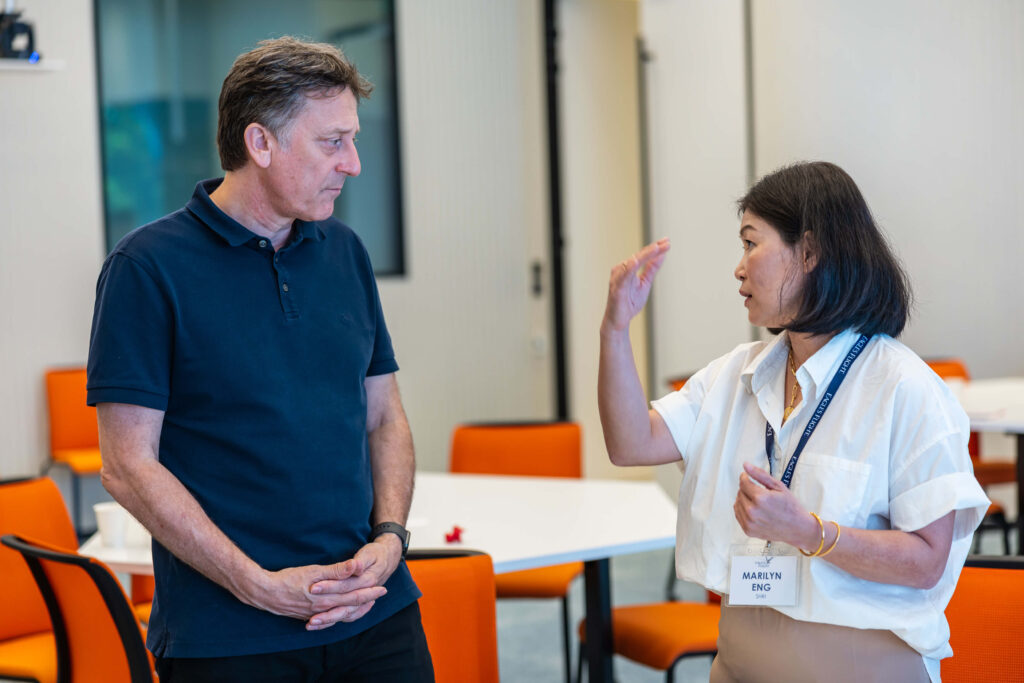
A more useful starting point could be to ask: What do we actually need people to do differently, and where could stronger capabilities improve workplace performance?
It could be managers who need more confidence having difficult conversations, teams struggling to collaborate across functions or leaders preparing to guide their people through change.
These challenges can provide a starting point for making more purposeful learning investments.
Before finalising your remaining 2026 L&D budget, here are five questions worth considering.
1. What skills and capabilities could we invest in now to support our business priorities for 2027?
Business priorities may change from one year to the next, though organisations do not always need to develop an entirely new set of skills. Sometimes, people need help applying what they already know in new or more demanding situations.
The World Economic Forum’s Future of Jobs Report 2025 estimates that 59% of the global workforce will need to learn new skills or build on existing ones by 2030. The report also found that 63% of employers see skills gaps as a major barrier to business change.
LinkedIn’s 2026 Talent Velocity Advantage Report found that 81% of surveyed organisations in Asia Pacific lacked the ability to identify the skills they had, build the skills they needed or move people into roles where those skills were required.
For example, teams working across different sites may need to share information and make decisions more consistently. In work where mistakes can have serious consequences, employees may need to raise concerns sooner and make sound decisions under pressure. When an organisation introduces new ways of working, leaders may need to help their teams adapt.
Rather than starting with a list of training topics, think about the situations your people are likely to face in 2027. What would help them handle those situations well?
This gives you a clearer basis for deciding where the remaining budget could be most useful.
2. Where could stronger leadership behaviours make the greatest difference to team performance?
Leaders face different challenges, so they may need support with different skills.
A new manager may need help delegating work, coaching staff or handling difficult conversations. A senior leader may need help managing change, setting priorities or bringing different teams together.
Their roles are different, but both can affect how their teams work.
Gallup estimates that managers account for around 70% of why employee engagement levels vary from one team to another. It’s a reminder that the way managers lead and support their people can make a real difference to how engaged they feel at work. While engagement is not the same as performance, this finding reinforces the importance of how managers lead, communicate and support their people.
It may help to look at the challenges already showing up in everyday work:
- Are managers finding it difficult to give useful feedback?
- Are decisions taking too long because responsibilities are unclear?
- Are teams finding it hard to put business plans into action?
Once the challenge is clear, it becomes easier to choose development that fits. This could mean helping managers handle conversations more confidently, make decisions more clearly or support their teams through change.
3. How can we ensure our learning investments lead to meaningful changes in workplace behaviour?
A manager may understand coaching in a workshop but still find a difficult conversation challenging. A team may discuss collaboration, then return to old habits when work gets busy.
This is why learning needs to continue beyond the session. The forgetting curve describes how new information can be harder to remember over time without practice or reminders.
The 70-20-10 framework offers another way to think about development:
70% through experience: taking on challenges and using skills at work
20% through others: learning from feedback, coaching and colleagues
10% through formal learning: attending workshops, courses or training
These are not fixed percentages or a formula for dividing a budget. They simply show that development can happen through work, other people and formal learning.
For example, a workshop can help managers practise difficult conversations, while a Themed Learning Experience lets teams practise communication, collaboration and decision-making. Our AI-powered talent development tool can help reinforce learning afterwards. For longer-term needs, a Capability Journey connects learning, practice and follow-up over time.
When reviewing remaining budgets, consider both what can be delivered now and how people will use their learning at work in 2027.
4. How could a year-end team experience strengthen collaboration, alignment and readiness for 2027?
If you’re considering a year-end team experience, start with how people will need to work together in the year ahead. Teams across different sites may need clearer handovers and more consistent decisions. Teams facing change may need to adapt quickly, while people working in higher-risk settings may need to communicate concerns and make sound decisions under pressure.
A Themed Learning Experience gives participants a chance to work towards a shared goal through an interactive challenge. Afterwards, a facilitator helps the team reflect on how they communicated, made decisions and worked together. The discussion connects the experience to day-to-day work. It can help people recognise what supported the team, where they could improve and what they might do differently.
This gives teams a chance to connect at year-end while exploring practical ways to work more effectively together.
5. What improvements in workplace performance would make our learning investment worthwhile?
Before choosing a programme, agree on what you hope people will do differently at work.
For teams working across locations, this might mean sharing information more consistently or making decisions more clearly. In roles where mistakes can have serious consequences, it could mean raising concerns sooner or making sound decisions under pressure. When an organisation introduces new ways of working, people may need help understanding what is changing and adapting to it.
A useful next step is to decide how you’ll recognise progress. Are teams sharing information more consistently? Are managers having better coaching conversations? Are people using a new process in their daily work?
Participant feedback can tell you how people felt about a programme. It doesn’t show on its own whether they’re using what they learned at work.
DDI’s 2027 Global Leadership Forecast found that 68% of HR leaders said their leadership programmes improved leaders’ skills. However, only 51% said their programmes provided evidence of their effectiveness. DDI also found that HR leaders looked for changes in leaders’ behaviour or skills, team results and business performance when judging a programme’s value. Fewer relied on attendance or participant satisfaction alone.
Before the programme begins, agree on what success will look like for your team. This could mean clearer decisions across locations, concerns being raised sooner or people using a new process with confidence. After the programme, follow up with managers and participants to understand what changed and where people may need more support.
Looking Ahead: Making Learning Investments More Meaningful
Year-end budget planning is not simply about deciding which learning activities can still be delivered before the calendar closes.
It can also be an opportunity to look at the challenges people are facing today and the capabilities they will need to support business priorities in 2027.
The right investment will depend on what the organisation needs to achieve, which behaviours could make a difference and how learning can be applied beyond the programme itself.
At Eagles Flight Asia Pacific, we work with organisations to design experiential learning programmes, Themed Learning Experiences and structured Capability Journeys that connect learning with the situations leaders and teams face at work.
Our approach creates opportunities for people to experience, reflect on and practise behaviours they can apply beyond the learning environment.
Learning Programmes Built Around Your Business Priorities
Whether you’re looking to strengthen leadership, improve team collaboration or build capabilities for the year ahead, explore how our experiential learning programmes can support your people and performance priorities.
Frequently Asked Questions
Only if there is a clear development need the investment can support. Consider what your people need to do in 2027, what can be arranged in time, and your organisation’s rules for committing the budget.
Learning priorities should reflect the organisation's business objectives and the capabilities employees need to deliver them. These may include leadership effectiveness, communication, decision-making, adaptability and cross-functional collaboration. The right priorities will depend on the challenges facing the organisation and where development could have the greatest impact.
Leadership development can help managers strengthen the behaviours that influence how teams work, including coaching, delegation, communication and accountability. By practising these behaviours and applying them in everyday situations, leaders can become better equipped to support their people, address performance challenges and guide teams through change.
Organisations can support learning application through follow-up activities, opportunities to practise, coaching and regular feedback. A single workshop can provide a useful starting point, while reinforcement tools such as digital learning nudges can help participants revisit key concepts and apply what they have learnt in their everyday work.
The 70-20-10 framework describes three broad sources of development: 70% through experience, 20% through learning from others and 10% through formal training. It is a general development framework rather than a fixed formula. Its main principle is that learning can be strengthened through a combination of structured development, feedback and practical application.
Management development programmes can help managers strengthen essential skills such as delegation, coaching, communication, decision-making and accountability. Through practical learning experiences, managers can develop the confidence and capability to handle everyday challenges, support their teams and contribute to stronger workplace performance.
Organisations can look beyond attendance and participant satisfaction by identifying changes in workplace behaviour. These might include more consistent coaching conversations, clearer accountability, improved collaboration or more effective decision-making. Agreeing on observable outcomes before a programme begins can provide a useful basis for evaluating progress.
This depends on each company's financial, procurement and budget policies. Some organisations may be able to commit their remaining 2026 budgets towards learning programmes delivered in 2027, subject to internal approval. HR and L&D teams should confirm the relevant requirements with their finance and procurement teams before committing funds.
Sources
- World Economic Forum, The Future of Jobs Report 2025 — workforce training needs and skills gaps. World Economic Forum
- LinkedIn, 2026 Talent Velocity Advantage Report — talent velocity findings, including the Asia Pacific figure. delivery-p143253-e1476319.adobeaemcloud.com
- Gallup, Global Indicator: Leadership & Management — the estimate that managers account for 70% of the variance in team engagement. Gallup
- DDI, Leadership Development ROI Is Real—and Proving It Is Harder — the 68% and 51% findings, and how HR leaders assess programme value.